
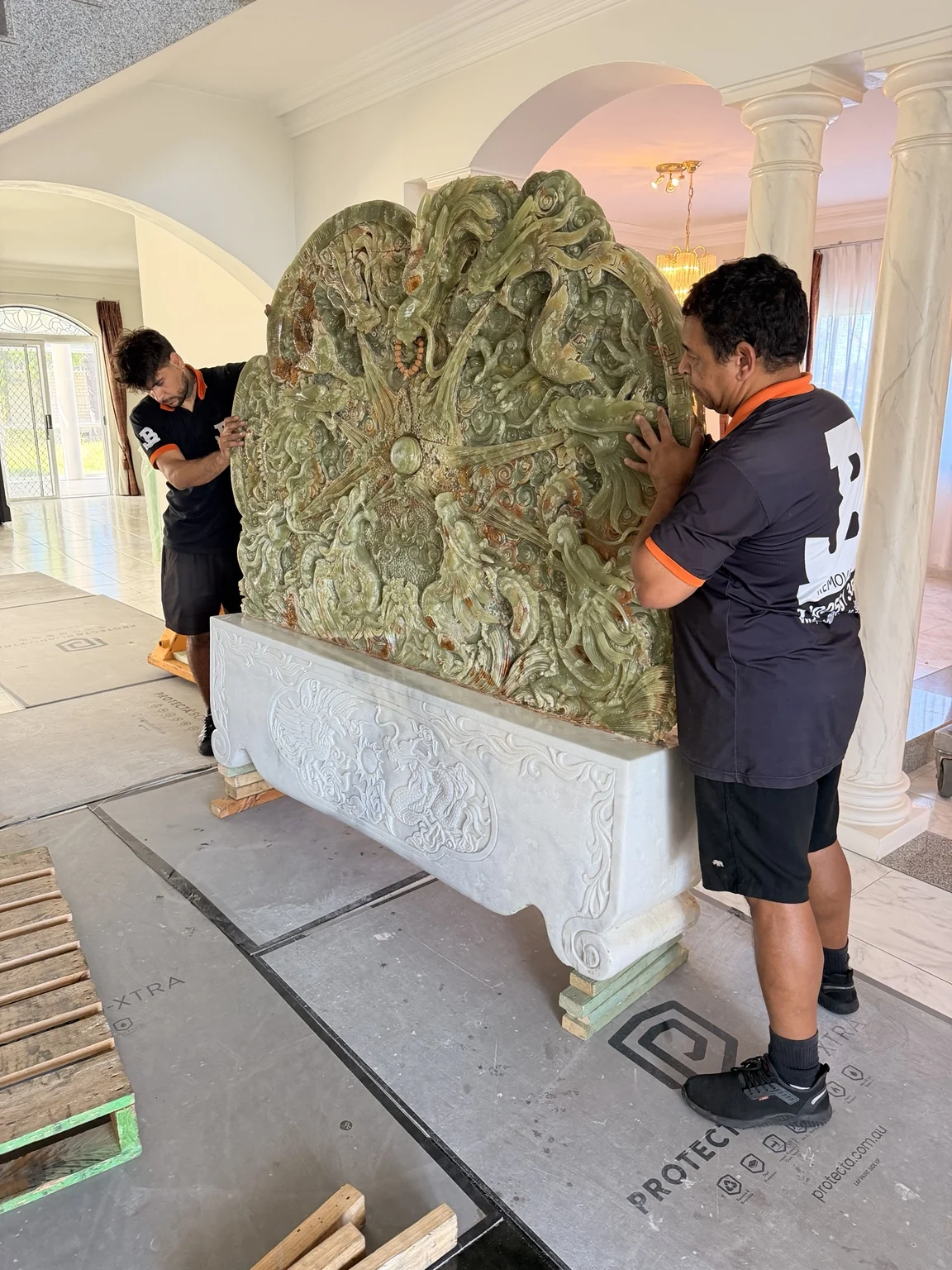
Understand the piece and its support needs
Provide photographs from several angles, known weight and dimensions, and details of the base, top and connecting sections. Explain whether the piece is one unit or assembled from separate parts, and whether specialist separation advice is available.
Identify delicate surfaces, overhangs, existing damage and any manufacturer, installer or conservator instructions. A visually strong section is not automatically a suitable lifting or support point, so handling information should be reviewed before the method is agreed.
Consider the transfer stages inside the building
Show collection-room access, corridor widths, turns, lifts, thresholds and the route to the loading position. Protection may be needed for the object and the property, including floors, doorways and the lift interior.
At the receiving end, a piece may need supported turning or lowering after it has passed the last doorway. Include the installation space and intended supports in the enquiry rather than treating delivery inside the building as the end of the job.
Agree separation, crating and installation boundaries
Some projects involve specialist separation, custom supports, crating or coordination with installers. State which tasks are required, which contractors are already engaged and who is responsible for approving the handling sequence.
Moving and positioning do not automatically include restoration, structural design, fixing, stone cutting or reinstatement. Any such work should be separately identified and assigned in the written scope so the responsibilities are clear.
Relevant stone and oversized-table experience
JB’s Sydney Martin Place sculpture project involved a four-tonne marble base and a one-tonne top handled separately, with specialist separation and crating described in the original case study. A different project involved placing a 7.5-metre, one-tonne table with coordinated lifting support.
These are distinct Sydney jobs that demonstrate different handling problems. They are useful references for a Melbourne enquiry, but the support method, crew and equipment for your piece depend on its construction and access.
RELEVANT JB EXPERIENCE
Real Sydney projects behind the Melbourne expansion
These photographs and case studies document Sydney work. They illustrate relevant loads and methods; the approach for your property is assessed separately.
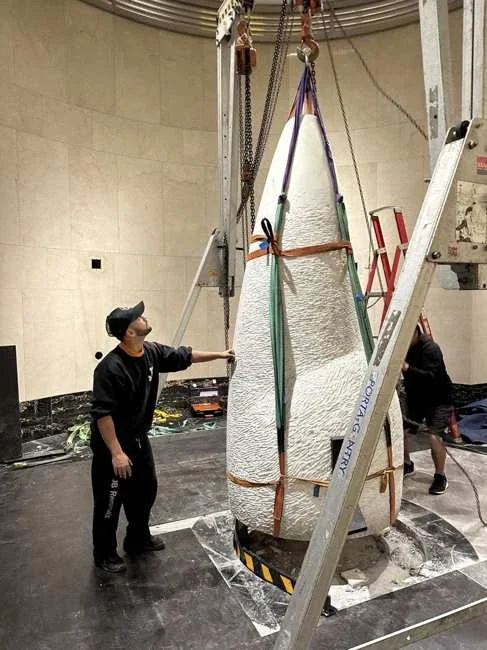 4 t base + 1 t top
Martin Place marble sculpture
A Sydney CBD commercial heavy lifting project: four-tonne and one-tonne marble sections, diamond-wire separation, specialist drilling, gantry handling and crating for Brisbane.
Read the Sydney case studyFind your local area
Read a location-specific access guide and review relevant project experience.
View all 10 Melbourne area guidesMelbourne heavy lifting with complete A-to-B transport
JB can coordinate collection, lifting, loading, road transport, unloading and final placement. Discuss the full journey for safes, machinery, stone, commercial equipment or other heavy items, including any transfers between forklifts, gantries, skates, trolleys and the vehicle.
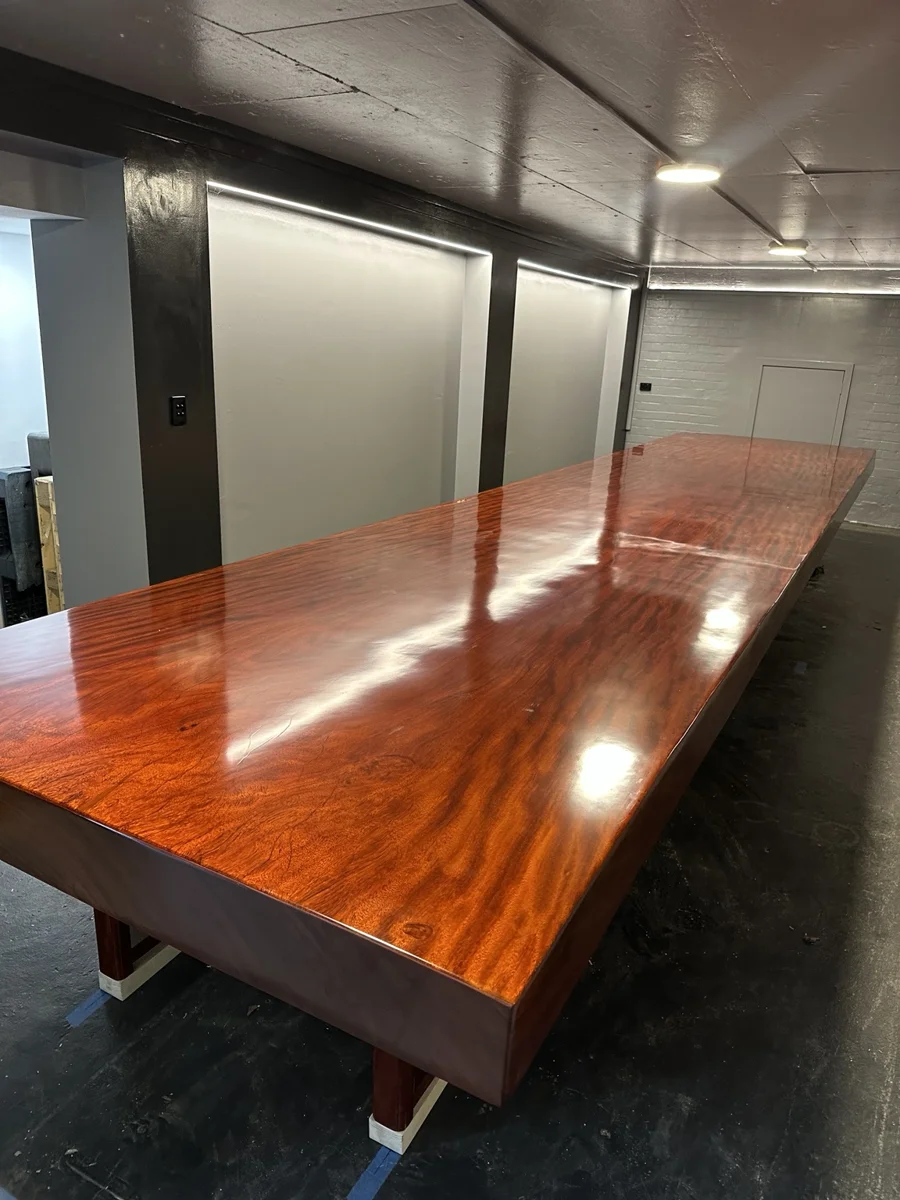 1 tonne · 7.5 m
One-tonne, 7.5-metre table installation
An eight-person crew used four scissor lifts, pallet jacks and a HIAB crane truck to position a 7.5-metre, one-tonne table on two stands, then level it over an uneven floor.
Read the Sydney case studyPrepare your marble & sculpture removals enquiry
A complete brief helps JB identify the handling stages and prepare a project-specific scope.
- Photos of the piece, joins, base and existing supports
- Known weight, dimensions and separate component details
- Manufacturer or specialist handling instructions
- Complete access route and final installation area
- Required separation, crating, fixing and contractor responsibilities
Where information is unavailable, say so. The team can explain whether further measurements, photographs or an inspection are needed before the method and price are confirmed.
Start your project enquiryMarble & sculpture removals in Melbourne: your questions
Can you move a heavy stone table within one Melbourne building?
Describe both positions and the complete route between them. Controlled handling and final placement can still require specialist assessment without road transport.
Can you separate a marble top and base?
Tell JB how they are joined and provide any installer or specialist advice. Separation is a task to assess and scope, not something to assume from the appearance of the piece.
Can you work with a designer or installer?
Identify the relevant contacts, approved handling information and installation sequence in your enquiry. Any coordination and specialist responsibilities should be agreed before the move.